<000005>

清纯萌妹子KIKI第二部 黑色道具JJ高潮喷水毛很是诱惑_清纯女神萌妹主播哆哆微信福利40部_清纯售货员妹子试衣间被操 ed2k_清纯唯美激情五月姐姐

清纯软妹女优排行 清纯唯美台湾妹中文请播放黄色片最精彩的黄色短片两个人真正的日逼的和小姐的女士 去你妹影院一本道情妹妹色情官网 情趣丝袜空姐制服图片情色情妹 情趣空姐制服丝袜图片

On the 3rd of February Mr. Darby brought forward a motion that the sheriffs should be discharged from the custody of the Serjeant-at-Arms. This gave rise to a long and animated debate. The Attorney-General opposed the motion, contending that until they made their submission the House could not dismiss them with due regard to its dignity. Sir William Follett replied to the arguments of the Attorney-General, and was answered by the Solicitor-General. The debate was adjourned, and was resumed on the 7th. At its conclusion the House divided on the question that the sheriffs be discharged, which was negatived by a majority of 71. On the 12th Mr. Sheriff Wheelton was discharged on account of ill-health, a motion for the release of the other sheriff having been rejected.On April 6th a great meeting was held in Westminster, avowedly to add weight to the county petitions for economical reform, which were now pouring into the House of Commons. Fox presided, and was supported by the Dukes of Devonshire and Portland. Government, to throw discredit on the meeting, affected alarm, and, at the request of the Middlesex magistrates, who were believed to have been moved by Ministers to make it, a body of troops was drawn up in the neighbourhood of Westminster Hall. The indignation of the Opposition was so much excited that Burke, in the House of Commons, commenting on this attempt to insinuate evil designs against the friends of reform, denounced the Middlesex magistrates as creeping verminthe very "scum of the earth;" and Fox declared that if soldiers were to be let loose on the constitutional meetings of the people, then all who went to such meetings must go armed!このページの先頭です
ONE:The convention, which did not contain a word about the opium trade, gave great dissatisfaction at home, and Lord John Russell declared in the House of Commons, on the 6th of May, that it had been disapproved of by the Government; that Captain Elliot had been recalled, and Sir Henry Pottinger appointed plenipotentiary in his stead. The Chinese, meanwhile, soon violated their engagements. On the 19th of February an English boat was fired upon from North Wang-ton, in consequence of which the squadron under Captain Sir H. Flemming Senhouse attacked the forts on the 26th of February, and in a very short time the British colours were flying on the whole chain of these celebrated fortifications, and the British became masters of the islands without the loss of a single man. Proceeding up the river towards the Whampoa Reach they found it fortified with upwards of forty war junks, and the Cambridge, an old East Indiaman. But they were all silenced in an hour, when the marines and small-arm men were landed and stormed the works, driving before them upwards of 3,000 Chinese troops, and killing nearly 300. Next day Sir Gordon Bremer joined the advanced squadron, and the boats were pushed forward within gunshot of Howgua's fort; and thus, for the first time, were foreign ships seen from the walls of Canton. On the 2nd of May the Cruiser came up, having on board Major-General Sir Hugh Gough, who took command of the land forces. On approaching the fort it was found to be abandoned, as well as those higher up the river, the Chinese having fired all their guns and fled. The Prefect or Governor of Canton then made his appearance, accompanied by the Hong merchants, announcing that Keshin having been recalled and degraded, and the new Commissioner not having arrived, there was no authority to treat for peace. Captain Elliot again hesitating, requested the naval and military commanders to make no further movement towards the city until it was seen what was the disposition of the provincial authorities at Canton, and admitted the[475] city to a ransom of 1,250,000. But Sir G. Bremer observed in a despatch that he feared the forbearance was misunderstood, and that a further punishment must be inflicted before that arrogant and perfidious Government was brought to reason. He was right; for on the 17th of March a flag of truce, with a message sent by Captain Elliot to the Imperial Commissioner, was fired upon by the Chinese. In consequence of this, a force under Captain Herbert, who was in advance of the rest of the armament, carried in succession all the forts up to Canton, taking, sinking, burning, and otherwise destroying the flotilla of the enemy, and hoisted the union Jack the same day on the walls of the British factory.The condition of the Irish poor, and the expediency of a State provision for their support, had long been a subject of anxious consideration with the Imperial Government and the legislature, and also with public men of every party who took an interest in the state of the country. It was at length resolved that something should be done for their regular relief. At the close of 1835 there had been a Poor Law Commission in existence for more than two years, consisting of men specially selected on account of their fitness for the task, and standing high in public estimation, including the Protestant and Roman Catholic Archbishops of Dublin. They were appointed, in September, 1833, "to inquire into the condition of the poorer classes in Ireland, and into the various institutions at present established by law for their relief, and also whether any and what further remedial measures appear to be requisite to ameliorate the condition of the Irish poor or any portion of them." In July, 1835, they made their first report, in which they refer to the various theories with which they were assailed in the course of their inquiries. "One party attributed all the poverty and wretchedness of the country to an asserted extreme use of ardent spirits, and proposed a system for repressing illicit distillation, for preventing smuggling, and for substituting beer and coffee. Another party found the cause in the combinations among workmen, and proposed rigorous laws against trades unions. Others, again, were equally confident that the reclamation of the bogs and waste lands was the only practical remedy. A fourth party declared the nature of the existing connection between landlord and tenant to be the root of all the evil. Pawn-broking, redundant population, absence of capital, peculiar religious tenets and religious differences, political excitement, want of education, the maladministration of justice, the state of prison discipline, want of manufactures and of inland navigation, with a variety of other circumstances, were each supported by their various advocates with earnestness and ability, as being either alone, or conjointly with some other, the primary cause of all the evils of society; and loan-funds, emigration, the repression of political excitement, the introduction of manufactures, and the extension of inland navigation, were accordingly proposed each as the principal means by which the improvement of the country could be promoted."
ONE:On the 18th of February, Colonel Fitzpatrick, Fox's most intimate friend, presented another petition from the electors of Westminster, praying to be heard by counsel, in consequence of new facts having come to light, but Lord Frederick Campbell, on the part of Government, moved that such counsel should not argue against the legality of the scrutiny. The counsel, on being admitted, refused to plead under such restrictions. The House then called in the high bailiff, and demanded what the new facts were on which the petition was based, and he admitted that they were, that the party of Mr. Fox had offered to take the scrutiny in the parishes of St. Margaret's and St. John's alone, where Mr. Fox's interest was the weakest, in order to bring the scrutiny to an end, and that Sir Cecil Wray had declined the offer. Colonel Fitzpatrick then moved that the high bailiff should be directed to make a return, according to the lists on the close of the poll on the 17th of May last. This motion was lost, but only by a majority of nine, showing that the opinion of the House was fast running against the new Minister, and on the 3rd of March Alderman Sawbridge put the same question again, when it was carried by a majority of thirty-eight. It was clear that the Government pressure could be carried no further. Sawbridge moved that the original motion should be put, and it was carried without a division. The next day the return was made, and Fox and Lord Hood were seated as the members for Westminster. Fox immediately moved that the proceedings on this case should be expunged from the journals, but without success. He also commenced an action against the high bailiff for not returning him at the proper time, when duly elected by a majority of votes. He laid his damages at two hundred thousand pounds, and the trial came on before Lord Loughborough, formerly Mr. Wedderburn, in June of the following year, 1786, when the jury gave him immediately a verdict, but only for two thousand pounds, which he said should be distributed amongst the charities of Westminster.It was found that the potato was almost the only food of the Irish millions, and that it formed their chief means of obtaining the other necessaries of life. A large portion of this crop was grown under the conacre system, to which the poorest of the peasantry were obliged to have recourse, notwithstanding the minute subdivision of land. In 1841 there were 691,000 farms in Ireland exceeding one acre in extent. Nearly one-half of these were under five acres each. The number of proprietors in fee was estimated at 8,000a smaller number in proportion to the extent of territory than in any other country of Western[536] Europe except Spain. In Connaught, several proprietors had 100,000 acres each, the proportion of small farms being greater there than in the rest of Ireland. The total number of farms in the province was 155,842, and of these 100,254 consisted of from one to five acres. If all the proprietors had resided among their tenantry, and been in a position to encourage their industry and care for their welfare, matters would not have been so bad; but most of the large landowners were absentees. It frequently happened that the large estates were held in strict limitation, and they were nearly all heavily encumbered. The owners preferred living in England or on the Continent, having let their lands on long leases or in perpetuity to "middlemen," who sublet them for as high rents as they could get. Their tenants again sublet, so that it frequently happened that two, three, or four landlords intervened between the proprietors and the occupying tenant, each deriving an interest from the land. The head landlord therefore, though ever so well-disposed, had no power whatever to help the occupying tenants generally, and of those who had the power, very few felt disposed. There were extensive districts without a single resident proprietor, and when the absentees were appealed to by the local relief committees during the famine to assist the perishing people, they seldom took the trouble of answering the application.
ここから本文です
イメージ

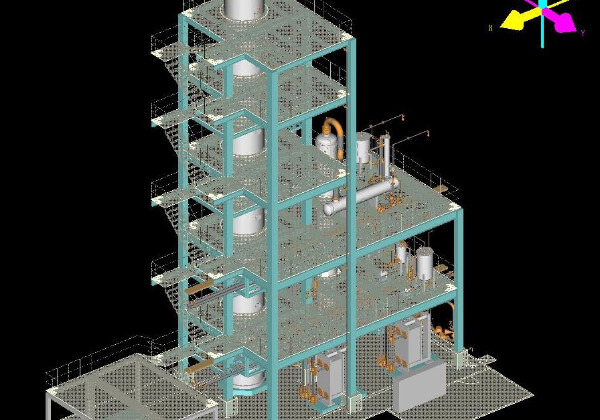
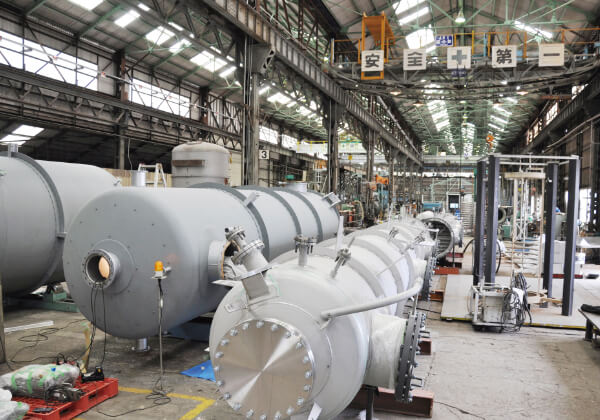
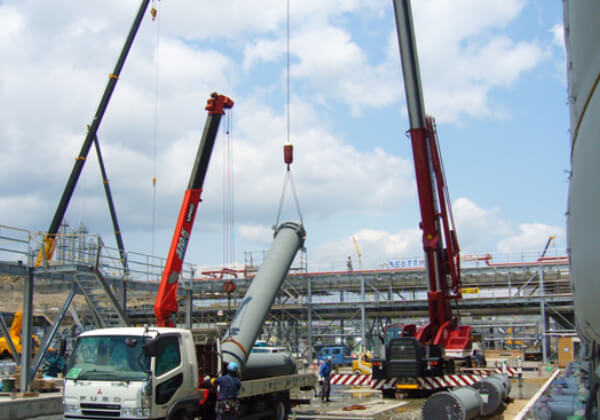
日本化学機械製造株式会社は、化学機器を自社工場にて製造できるプラントエンジニアリング企業です。

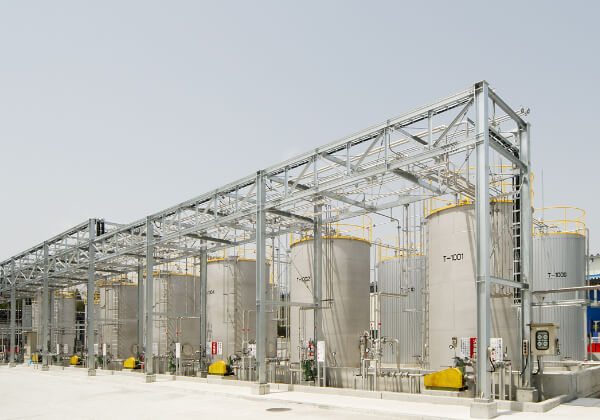
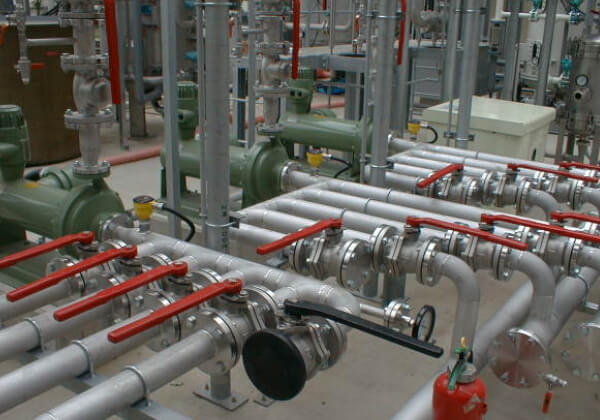
自社工場は、高圧ガス設備、圧力容器、また特殊材(耐食材料)の製作も可能で、材料手配から納入まで一括管理を行っています。プラントは様々な装置、機器類の組み合わせで構成されており、エンジニアリングには多くの知識と経験が必要とされます。
イメージ

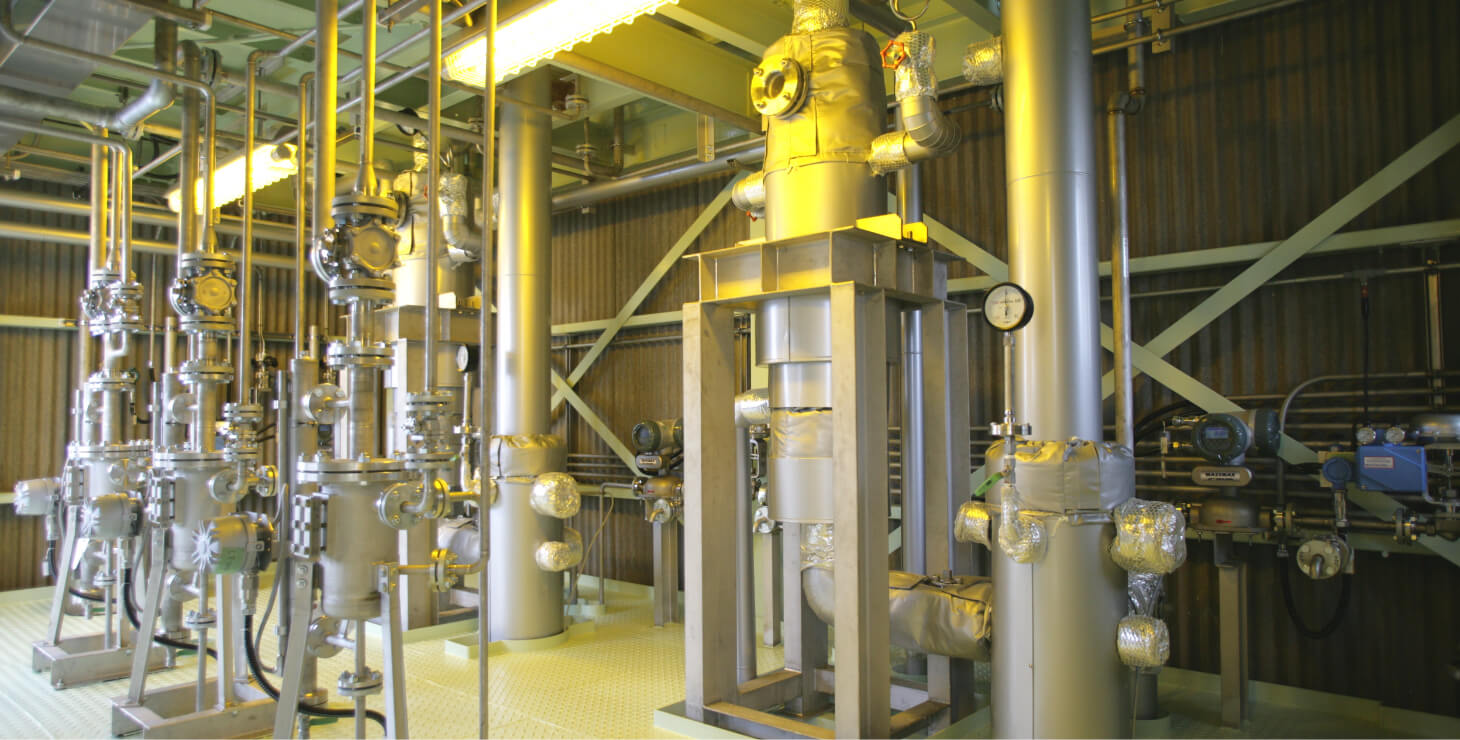
また、時代背景?外部環境の変化に伴いプラントに対するお客様のニーズも多種多様に変化しています。 設備の抱える様々な問題の解決、省エネルギー、環境対策、生産効率、品質向上、新製品生産のプロセス構築?設備計画の具現化によりお客様の事業価値向上の一助となるべく、最新の技術の開発、活用に努めております。 常にお客様の立場になり、安全で効率的な設備の構築を念頭に取り組んでおります。

TWO:Such was the state of Spain, though nominally conquered by the French. It was only held by a vast force, and there was no prospect that this force could ever be dispensed with. Joseph was so heartily tired of his kingdom that, on going to Paris to attend Napoleon's marriage, he declared that he would abdicate unless he were made generalissimo of all the forces in Spain, the separate generals, in their own provinces, paying but little regard to his commands, but each acting as if viceroy of his own province. To Napoleon the state of things was equally irksome. The drain of men and money was intolerable, and appeared without prospect of any end. He resolved, therefore, to make a gigantic effort to drive the British out of Portugal, when he hoped to be able to subjugate Spain. He could not yet proceed thither himself, but he sent heavy reinforcements under Drouet and Junot, and dispatched Massena, who was reckoned the greatest general next to himself, to drive Wellington into the sea. Massena had been so uniformly victorious, that Buonaparte styled him "the dear child of victory," and had made him Prince of Esslingen.
  • アイコン

    THREE:[301]

    経験と実績をもとに、お客様のニーズに応じた最適な仕様?システムを構築、ご提案いたします。

  • アイコン

    THREE:

    工場建屋、事務所棟、倉庫、試験棟などの建設も一括してご依頼いただけます。

  • アイコン

    THREE:LORD BYRON.

    環境に配慮し、コストメリットを勘案した、省エネルギーで、省スペースな設備をご提案いたします。

  • アイコン

    THREE:We must return from victory abroad to discontent at home. On the 28th of January, 1817, the Prince Regent opened the fifth Session of Parliament. In his speech he expressed indignation at "the attempts which had been made to take advantage of the distresses of the country for the purpose of exciting a spirit of sedition and violence;" and he declared himself determined to put down these attempts by stern measures. The seconder of the Address in the Commons had the good sense to believe that the demagogues and their acts would die of themselves. Certainly, if the demagogues had no cause on which to base their efforts, those efforts must have proved fruitless; and the wisdom of Government consisted in seriously inquiring whether there were such causes. To attempt to insure peace by smothering distress is the old remedy of tyrants, and is like heaping fuel on fire to put it out. Whilst this debate was proceeding, a message arrived from the Lords to announce that the Regent, on his return from the House, had been insulted, and some missile thrown through the windows of his carriage. The House agreed upon an Address to the Regent on this event, and then adjourned.When the two parties separated in 1846, the Young Irelanders established the Irish Confederation, which held its meetings in the Music Hall, Abbey Street, and whose platform was occupied by a number of young men, who subsequently figured in the State trialsMr. Dillon, a barrister, who had been a moderator in Trinity College, Mr. Doheny, solicitor, Mr. O'Gorman, and Mr. Martin, a Protestant gentleman of property in the county Down. The object of the confederacy was to prepare the country for national independence, "by the force of opinion, by the combination of all classes of Irishmen, and the exercise of all the political, social, and moral influence within their reach." They disclaimed any intention of involving the country in civil war, or invading the just rights of any of its people; and they were specially anxious that Protestants and Roman Catholics should be united in the movement. Resolutions to this effect were adopted at a great meeting in the Rotunda, a revolutionary amendment by Mr. Mitchel having been rejected, after a stormy debate, which lasted three days, and did not terminate on the last day until one o'clock at night. This led to Mitchel's secession from the Nation, and the establishment of the United Irishman, in which he openly and violently advocated rebellion and revolution. He continually insisted on the adoption of the most diabolical and repulsive measures, with the utmost sang froid. Every Saturday his journal contained a letter "To the Earl of Clarendon, Her Majesty's Executioner-General and Butcher-General of Ireland." Plans of insurrection were freely propounded; the nature and efficiency of street fighting were copiously discussed; ladies were invited to throw vitriol from their windows on the Queen's troops, and to fling empty bottles before the cavalry that they might stumble and fall. Precise instructions were given, week after week, for the erection of barricades, the perforation of walls, and other means of attack and defence in the war against the Queen.

    高圧ガス設備、圧力容器の製造資格を持った自社工場での製作により、品質、納期を管理しております。

  • アイコン

    THREE:That very day General Smith reached Corregaum in force, and at this apparition the Peishwa fled back towards the sources of the Kistnah, whence he had descended. Not only General Smith, but Brigadier-General Pritzler and Colonel Boles kept up the pursuit, advancing from different quarters, as the slippery Mahratta chief turned and man?uvred. At length weary of the chase, they determined to reduce Satara, his capital, and then each of his strong forts and towns one after another, thus depriving him of supplies, and leaving him no place of refuge or subsistence. Satara surrendered to General Smith on the 10th of February, the same day that he appeared before it. As one place after another fell, Gokla, the Peishwa's general, made an effort to arrest this process of reduction, and this enabled General Smith to attack him on the 20th of February, at Ashtee, where he completely routed him. Gokla himself was killed, and the Peishwa only escaped by abandoning his palanquin and mounting a horse. General Smith and Lieutenant Warrand were[141] wounded, but not a man was killed on the British side. Great booty was taken, including twelve elephants and fifty-seven camels.The year 1812 opened, in England, by the assembling of Parliament on the 7th of January. The speech of the Regent was again delivered by commission. The great topic was the success of the war in Spain under Lord Wellington, whose military talents were highly praised. There was a reference also to the disagreements with America, and the difficulty of coming to any amicable arrangement with the United States. Lords Grey and Grenville, in the Peers, pronounced sweeping censures on the continuance of the war with France, and on the policy of Ministers towards America, from which source they prognosticated many disasters. In the Commons, the Opposition used similar language; and Sir Francis Burdett took a very gloomy view of our relations both with France and North America, and declared that we could anticipate no better policy until we had reformed our representative system.

    コストを積算し、見積価格をご提示します。回収期間法などの設備投資の経済性計算をお客様とご一緒にシミュレーションすることも可能です。

  • アイコン

    THREE:C'est le sort le plus beau, le plus digne d'envie!"

    化学工場への納入実績が多く、各種法規にも精通しています。官庁申請書類の作成もサポートいたします。

  • アイコン

    THREE:At this juncture, while daily desertions thinned Mar's army at Perth, arrived the Pretender. He landed at Peterhead on the 22nd of December. On the 6th of January, 1716, he made his public entry into Dundee, at the head of his cavalcade, the Earl of Mar riding on his right hand, and the Earl Marshal on his left, and about three hundred gentlemen following. His reception was enthusiastic. The people flocked round him to kiss his hands; and to gratify this loyal desire he remained an hour in the market-place. On the 8th he arrived at Scone, and took up his residence in the ancient palace of his ancestors. There he was only two miles from the army, and having established a council, and issued six proclamations, ordering a public thanksgiving for the "miraculous providence" of his safe arrival, for prayers in the church, for the currency of foreign coin, for a meeting of the Convention of Estates, for all fencible men from sixteen to sixty to repair to his standard, and for his coronation on the 23rd of January, he presented himself before the army. But here the scene was changed. Instead of enthusiasm there was disappointmentdisappointment on both sides. The soldiers, who expected to see a royal-looking, active-looking man, likely to encourage them and lead them on their career, beheld a tall, thin, pale, and dejected sort of person, who evidently took no great interest in them. That the Pretender should not exhibit much vivacity was no wonder. He had been assured by Mar that his army had swelled to sixteen thousand men; that the whole North was in his favour; and that he had only to appear to carry everything before him. On inquiring into the force, it turned out to be so miserably small, that the only desire was to keep it out of sight. The spirits of the Pretender fell, and though not destitute of ability, as is manifest by his letters, he had by no means that strength of resolution demanded by such an enterprise.

    社内に様々なテスト装置をそろえておりますので、事前の検証も可能です。
    新製品の生産プロセスの構築もご相談ください。

TWO:When the committee on the petitions next met, on the 10th of April, Dunning, elated with his success, was ready with fresh resolutions. His first was that it was necessary for the purity and independence of Parliament that the proper officer should, within ten days of the meeting of Parliament in each Session, lay before the House an account of moneys paid out of the Civil List, or out of any part of the public revenue, to any member of Parliament. This, too, was triumphantly carried, only to be followed by another from Dunning, that the persons holding the offices of Treasurer of the Chamber, Treasurer of the Household, or clerkships of the Green Cloth, with all their deputies, should be incapable of sitting in the House of Commons. Here the[266] confounded Ministerial members began to recover their spirit under the sweeping sentences passed against them, and Dunning only carried this resolution by a majority of two. Either they thought they had done enough by their late votes to satisfy their constituents, or Ministers had found means to render them obedient by menacing losses from their side, for when Dunning proposed a resolution that his Majesty should be requested not to dissolve or prorogue Parliament until proper measures had been taken to secure to the people the benefits prayed for in their petitions, the motion was rejected by a majority of fifty-one in a very full House. Fox and Dunning vented their indignation at this result on the Ministerial phalanx, whom they declared to be the worst of slavesslaves sold by themselves into the most contemptible thraldom. But their castigation was in vain; the troop was brought back to its primitive compliance, and defeated every future motion from the Opposition.Mother says death is best!

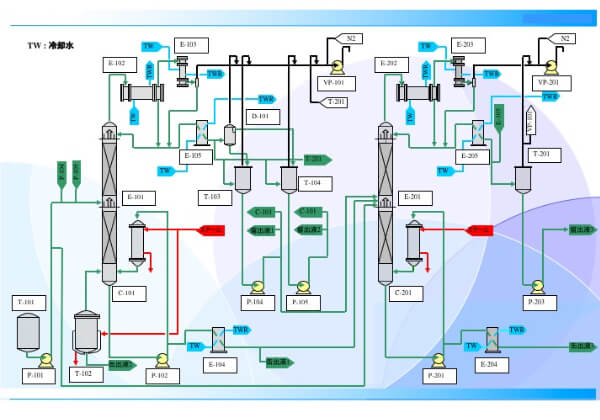
プラントの計画時から、設計、調達、建設、試運転、更には完成後のメンテナンスに至るまでトータルに対応いたします。当社は機器製作工場を所有しておりますので、細やかな機器設計?製作が可能です。

THREE:On the 13th of April the Speaker read to the House a notice which he had received, that a bill would be filed against him, in the Court of King's Bench, to try the validity of his warrant in this case, and the House ordered the letter and the notice to be entered on the Journals. On the 16th Sir Samuel Romilly moved for the discharge of Gale Jones; but Windham observed that a meeting of the electors of Westminster was announced for the morrow, to take into consideration the case of their representative, and that to liberate Jones at that moment would be sure to be attributed to fear on the part of the Commons. The motion was, therefore, rejected.
  • 事業計画

    FORE:

    工場建設、プラント新設の計画の立案には、大きな労力を要します。当社では、お客様の一助となるべく、官庁届け出の助成を行いながら、工場建設を進め、抱えておられる問題の解決に取り組んでおります。

  • 基本構想?基本設計

    FORE:GREAT SEAL OF GEORGE II.

    主要機器等の仕様を決定し、プラントの基本フローや配置を決定します。

THREE:The American disasters had now to be criticised in Parliament. On the 20th of November the two Houses met, and Lord Chatham rose instantly to reply, and to move an amendment on the Address. He attacked the Ministry with a still more personal and sweeping censure than he had done once before. "Can Ministers," he asked, "presume to expect a continuance of support in their career of ruinous infatuation? Can Parliament be so dead to its dignity and its duty as to be deluded into the loss of the one and the violation of the other? Will they continue to give an unlimited credit and support to Government in measures which are reducing this flourishing empire to ruin and contempt? But yesterday, and England might have stood against the world; now, none so poor to do her reverence! I use the words of a poet; but, though it be poetry, it is no fiction. It is a shameful truth, that not only the power and strength of this country are wasting away and expiring, but her well-earned glories, her true honour and substantial dignity, are sacrificed. France, my lords, has insulted you; she has encouraged and sustained America; and, whether America be wrong or right, the dignity of this country ought to spurn at the officious insult of French interference!" It is certain that Chatham would not have tolerated the presence of Franklin and Deane in Paris for a single day; they must have quitted France, or France would have been instantly compelled to throw off the mask. At this time, when the news neither of Howe's success in the south nor of Burgoyne's fall in the north had arrived, Chatham seemed to see in prophetic vision the disasters of the latter general. "The desperate state of our army," he said, "is, in part, known. No man thinks more highly of our troops than I do. I love and honour the English troops. I know that they can achieve anything but impossibilities; and I know that the conquest of English America is an impossibility. You cannotI venture to say ityou cannot conquer America! You may swell every expense and every effort still more extravagantly; pile and accumulate every assistance that you can buy or borrow; traffic and barter with every little, pitiful German prince that sells and sends his subjects to the shambles of a foreign prince; your efforts are for ever vain and impotentdoubly so from this mercenary aid on which you rely; for it irritates to an incurable resentment the minds of your enemies, to overrun them with the mercenary sons of rapine and plunder, devoting them and their possessions to the rapacity of hireling cruelty! If I were an American, as I am an Englishman, while a foreign troop was landed in my country, I would never lay down my armsnevernevernever!" On the subject of employing Indians in the war against the Americans, willing to forget that he had done the same thing in Canada, he burst forth most indignantly: "But, my lords, who is the man that, in addition to these disgraces[247] and mischiefs of our army, has dared to authorise and associate to our arms the scalping-knife and tomahawk of the savage? to call into civilised alliance the wild and inhuman savage of the woods? to delegate to the merciless Indian the defence of disputed rights, and to wage the horrors of this barbarous war against our brethren? My lord, these enormities cry aloud for redress and punishment. Unless done away, it will be a stain on the national characterit is a violation of the Constitution; I believe it is against the law. It is not the least of our national misfortunes, that the strength and character of our army are thus impaired; infected with the mercenary spirit of robbery and rapinefamiliarised to the horrid scenes of savage cruelty, it can no longer boast of the noble and generous principles which dignify a soldier!" He then proceeded to give the Americans credit still for a natural leaning towards England; believed that they might be drawn from their alliance with France; and recommended, by his amendment, an immediate cessation of arms, and a treaty between the countries, by which he hoped that America would yet be retained in affectionate dependence.Amongst the most distinguished of this series of architects is James Gibbs, who, after studying in Italy, returned to England in time to secure the erection of some of the fifty churches ordered to be built in the metropolis and its vicinity in the tenth year of Queen Anne. The first which he built is his finestSt. Martin's, at the north-east corner of Trafalgar Square.[160] Besides St. Martin's, Gibbs was the architect of St. Mary's, in the Strand; of Marylebone Chapel; of the body of All Saints', Derbyan incongruous addition to a fine old Gothic tower; of the Radcliffe Library, at Oxford; of the west side of the quadrangle of King's College, and of the Senate House, Cambridge, left incomplete. In these latter works Sir James Burrows, the designer of the beautiful chapel of Clare Hall, in the same university, was also concerned. Gibbs was, moreover, the architect of St. Bartholomew's Hospital.
  • 詳細設計?エンジニアリング

    FORE:

    設備の構成要素の詳細な仕様や配置を決定し、図面を作成します。

  • 調達

    FORE:One of the first things which the Regent did was to re-appoint the Duke of York to the post of Commander-in-chief of the Forces. Old Sir David Dundas, as thoroughly aware of his unfitness for the office as the army itself was, had requested leave to retire, and on the 25th of May the appointment of the duke was gazetted. There was a considerable expression of disapproval in the House of Commons of this measure. Lord Milton moved that it was highly improper and indecorous, and he was supported by Lord Althorp, Mr. Wynn, Mr. Elliot, Mr. Whitbread, and others; but the facts which had come to light through Mrs. Clarke's trials, both regarding her and her champion, Colonel Wardle, had mitigated the public feeling towards the duke so far, that the motion was rejected by a majority of two hundred and ninety-six against forty-seven. It is certain that the change from the duke to Sir David Dundas, so far as the affairs of the army were concerned, was much for the worse. The duke was highly popular in that office with the soldiers, and he rendered himself more so by immediately establishing regimental schools for their children on Dr. Bell's system.

    詳細設計に基づきポンプや部品類の購入品の調達先を選定し、発注します。
    プラントを構成する主要な機器は特注製作が多く、材料発注、製作、各種検査、運搬まで工程、納期を管理します。

  • 建設

    FORE:

    安全を第一に、管理技術者が責任を持って施工、工程、品質の管理を行いながら協力会社と連携し進めていきます。
    土木?建築、機器据付、配管、電気?計装、断熱などの工事があります。

  • 試運転

    FORE:The English Opposition now began to comment with great vigour on the conduct of affairs. The spirit of that body rose higher, as the imminence of war became greater. Charles James Fox made a motion for a committee to inquire into the causes of the inefficiency of his Majesty's arms in North America, and of the defection of the people in the province of Quebec. He took a searching review of the whole proceedings since 1774, and contended that there was a great lack of ability and management somewhere, either in the Government which planned, or the generals who had to execute the Ministerial orders. His motion, however, was useless, for it was rejected by two hundred and forty to one hundred and four votes.

    プラント完成後、性能が出るか試運転を行って確認、調整を行います。
    きめ細やかな運転指導により実運転へのスムースな移行を促します。完成図書と共にお引渡しとなります。

運転?保守フェーズ

  • メンテナンス

    FORE:

    プラント、機器の安全と安定稼働のために、定期的なメンテナンスをお薦めいたします。

  • 設備改造拡張

    FORE:"I have for several years endeavoured to obtain a compromise on this subject. The result of resistance to qualified concession must be the same in the present instance as in those I have mentioned. It is no longer worth while to contend for a fixed duty. In 1841 the Free Trade party would have agreed to a duty of 8s. a quarter on wheat, and after a lapse of years this duty might have been further reduced, and ultimately abolished. But the imposition of any duty, at present, without a provision for its extinction within a short period, would but prolong a contest already sufficiently fruitful of animosity and discontent. The struggle to make bread scarce and dear, when it is clear that part, at least, of the additional price goes to increase rent, is a struggle deeply injurious to an aristocracy which (this quarrel once removed) is strong in property, strong in the construction of our Legislature, strong in opinion, strong in ancient associations and the memory of immortal services."But Joseph did not live to see the full extent of the alienation of the Netherlands. He had despatched Count Cobentzel to Brussels on the failure of Trautmansdorff's efforts. Cobentzel was an able diplomatist, but all his offers were treated with indifference. On the last day of 1789 the States of Brabant, in presence of the citizens of Brussels, swore to stand by their new freedoman act which was received by the acclamations of the assembled crowds. They soon afterwards ratified their league with the other States, and entered into active negotiation with the revolutionists of France for mutual defence. On the 20th of February, 1790, Joseph expired, leaving a prospect full of trouble to his brother Leopold, the new Emperor.

    生産量を減らすことなく、生産能力を増強するなど、お客様のご要望にお応えできるソリューションをご提案いたします。

TWO:The first steamboat that was worked for hire in Britain was the Comet, a small vessel with an engine of three horse-power. Two years later the Elizabeth, of eight horse-power, and the Clyde, of fourteen horse-power, were placed upon the river Clyde. Thus Scotland has had the honour of leading the way in this great line of improvement. In 1820 there were but three steam-vessels built and registered in England, four in Scotland, and one in Ireland. In 1826 there were fifty in England, and twenty-two in Scotland, with 9,000 tons burden. The building of steamers proceeded regularly, with an increasing amount of tonnage, till the number rose in 1849 to 1,296 steam-vessels, the aggregate burden of which was 177,310 tons. They were distributed as follows:In the ports of England, 865 vessels, 103,154 tons; Scotland, 166 vessels, 29,206 tons; Ireland, 111 vessels, 26,369 tons; the Channel Islands, 7 vessels, 955 tons; the colonies, 147 vessels, 17,626 tons. A Committee of the House of Commons was appointed in June, 1837, to inquire into the best means of establishing communication by steam with India by way of the Red Sea. During the year arrangements were made for the establishment of a regular monthly steam communication between Great Britain and India by way of the Red Sea upon the following basis:"The Government undertakes the transmission of the monthly mails between Great Britain and Alexandria at the sole charge of the public; and the East India Company undertakes the transmission of these[422] mails between Alexandria and Bombay, upon condition that one-half of the expense incurred in the purchase and navigation of steam-vessels, and of any other expense incurred in the service, is defrayed by the Government, which is to receive the whole money connected with postage of letters between London and Bombay." This arrangement was carried out, and a further economy of time was obtained by the overland route to Marseilles, instead of transmitting the mails by steam-packets from Falmouth through the Strait of Gibraltar. In this way the journey was shortened to the extent of more than 1,000 miles, the direct distance by Marseilles and Malta being 5,238 miles, and by way of Falmouth, 6,310 miles. This system of conveyance was maintained till 1841, when the Government entered into a contract with the Peninsular and Oriental Steam Navigation Company, which undertook to employ powerful steam-vessels for the carrying of letters and passengers between England and Egypt, and between Suez, Ceylon, Madras, and Calcutta, towards the expenses of which the East India Company undertook to contribute 20,000 per annum for five years. After some time there was a further extension of the plan, by which the Government engaged to contribute 50,000 per annum towards the expense of the line of steam-packets between Bombay and Suez, 115,000 per annum for the service between Calcutta and Suez, and 45,000 for the service between Ceylon and Hong Kong, making a total of 210,000 per annum, of which one-third was to be repaid by the East India Company. By these arrangements was obtained a regular and safe steam communication twice a month to India, and once a month to China. We may judge of the extent of the intercourse thus carried on by the fact that in 1836 Great Britain received from Calcutta, Madras, Bombay, and Ceylon about 180,000 letters, and sent to those places in the same year nearly 112,000 letters.

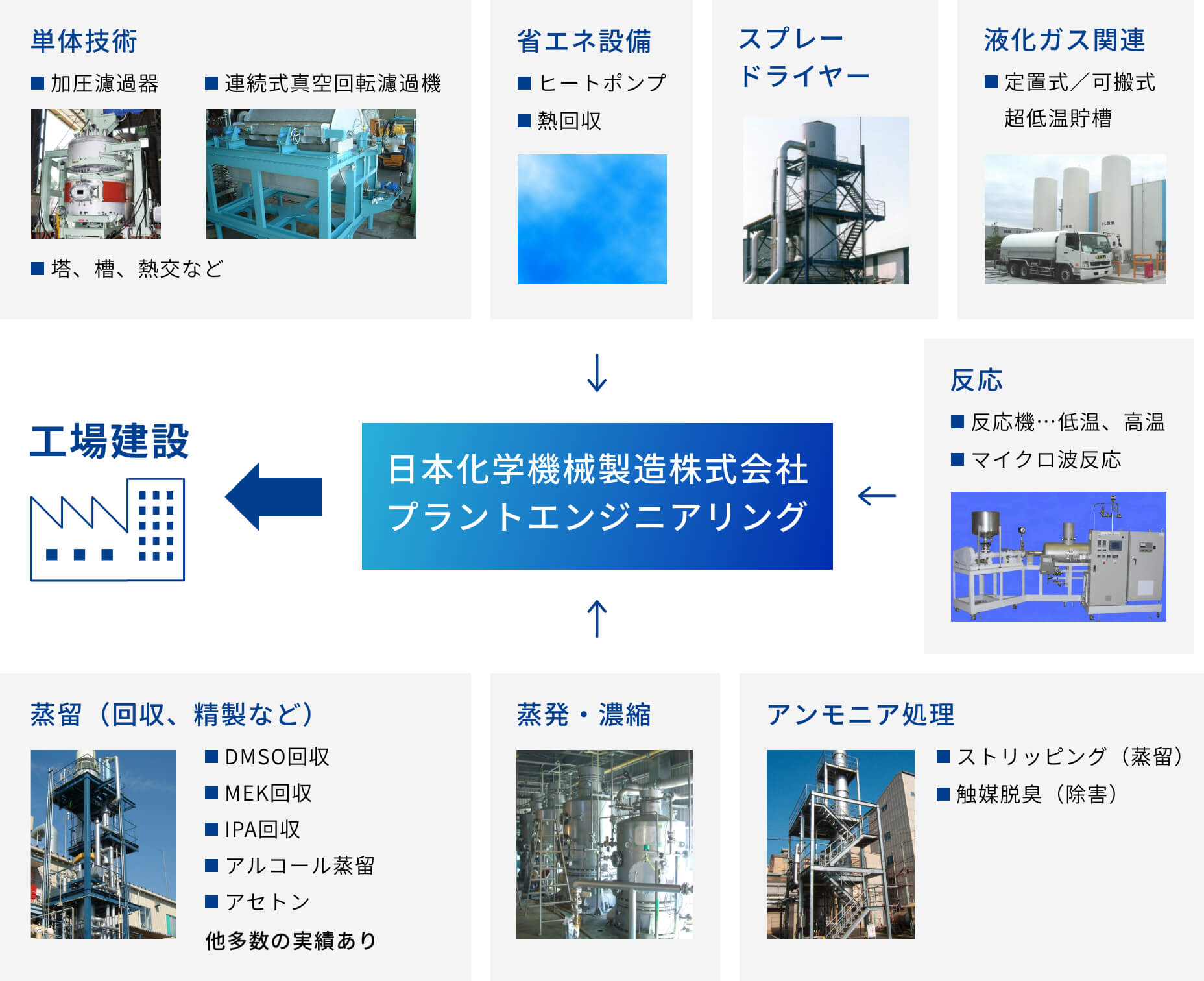
お客様のプロセスノウハウと当社の固有技術の融合によって最適化、効率化、さらには環境に優しい設備を実現をいたします。海外現地法人(タイ、ベトナム)におきましても同等のエンジニアリングが提供できるように、本社の技術者と連携し管理いたしております。
プラント建設と当社の技術

※これ以外にも様々な単位操作装置、単体機器製作ができます。

TWO:Buonaparte, seeing that nothing was to be expected from the Chambersfor even the Peers adopted the resolutions of the Representativeswho had already demanded his abdicationassumed the air of the despotic emperor, and demanded of Carnot that he should issue orders for a levy of three hundred thousand men, and should find supplies. Carnot said both propositions were impossible. Napoleon then summoned, on the night of the 21st, a general council, consisting of the late Ministers, the Presidents, and Vice-Presidents of the two Chambers, where Regnault and Maret recommended a show of resistance whilst offering terms of peace; but Lafayette said that would only make matters worse. The Allies were victorious, and there was but one course for the Emperor; and Lanjuinais and Constant supported that view. On the 22nd the Chamber of Representatives met early, and again demanded an act of abdication. Napoleon complied, but, as on his former abdication, only in favour of his son. The Chamber thanked him, but took no notice of the clause in favour of Napoleon II. But Lucien Buonaparte[103] and Labdoyre, in violent language, pressed on the House of Peers the recognition of Napoleon II. They persisted in passing it quietly over; but they required Napoleon to issue a proclamation to the army, declaring his abdication, without which the soldiers would not believe it, and, to conciliate them, he complied. Still, fearing lest he should put himself at the head of Grouchy's division, or some other, though small, troublesome force, they insisted that he should retire to Malmaisonso long the favourite abode of the repudiated Josephine, With this, too, he complied, but immediately discovered that he was surrounded by Guards, and was in fact a prisoner. General Becker was appointed to have surveillance over Napoleon; and it was supposed that, as Becker had personal cause of resentment against him, this surveillance would be rigorous. But Becker was a man of honour; he respected the misfortunes of a man who, whatever had been his crimes, had made himself almost master of the world, and he treated him with the utmost courtesy. Orders were issued by the Provisional Government for two frigates to convey Napoleon to the United States, and Becker was to allow of his retirement to Rochefort, in order to his embarkationto accompany him there, but not to permit his movement in any other direction.
業種?分野 プラント?設備名称 構成プロセス 付帯設備?工事施工
ファインケミカル IT関連化学品プラント 反応プロセス
ろ過分離プロセス
乾燥プロセス
クリーンルーム、充填、タンクヤード、
ユーティリティ、消火?防火設備、
土木?建築、計器?計装工事、
電気工事
食品工業 澱粉工場 反応プロセス
分離プロセス
精製プロセス
脱水?乾燥プロセス
タンクヤード、ユーティリティ、
消火?防火設備、土木?建築、
計器?計装工事、電気工事、
原料受入?貯蔵設備、計量?包装設備
化学工業 合成樹脂工場 > 反応プロセス
蒸留プロセス
濾過分離プロセス
乾燥プロセス
タンクヤード、ユーティリティ、
供給設備、充填、自動倉庫、
焼却設備、出荷設備
食品工業 糖化工場 >
(異性化糖類製造設備)
液化?糖化プロセス
濃縮プロセス
濾過?精製プロセス
タンクヤード、ユーティリティ、
土木?建築、計器?計装工事、
電気工事
環境?リサイクル 溶剤回収プラント 濃縮?調整プロセス
蒸留プロセス
タンクヤード、計量設備、
ユーティリティ、消火?防火設備、
計器?計装工事、電気工事、
原料受入?貯蔵?出荷設備
無機化学工業 触媒製造プラント
(自動車用)
調合プロセス
コーティングプロセス
焼成プロセス
ロボット搬送システム、
原料調整?供給装置
無機化学工業 二次電池用原料
精製プラント
調整プロセス
反応プロセス
分離?濃縮プロセス
蒸留プロセス
タンクヤード、ユーティリティ、
土木?建築、空調設備、集塵?局所排気、
計器?計装工事、
電気工事、貯蔵設備、計量?包装設備
新エネルギー バイオエタノール
大型実証モデルプラント >
蒸留プロセス
脱水プロセス
計器?計装工事、電気工事
無機化学工業 水素回収設備 水素回収プロセス タンクヤード、冷却システム、
計器?計装工事

※納入実績からの一部抜粋となります。ご計画中の設備、プロセスの実績はお気軽にお問い合わせください。

※GMP対応の医薬品製造設備としてバリデーション対応も可能です。

※海外への納入実績もございますので、設備計画の際は是非お声掛けください。

※プラントを構成する当社の特長ある化学機器はこちらからご覧いただけます。

TWO:"The Government, if it should determine under existing circumstances to maintain the statutes excluding Roman Catholics from power, must ask for new laws, the old having quite broken down. They must bring in a Bill requiring candidates for seats in Parliament to take at the hustings the oaths of supremacy and allegiance; otherwise they could not prevent Roman Catholics from contesting every vacant county and borough in the United Kingdom, and from becoming ipso facto members of Parliament, should constituencies see fit to elect them. Practically speaking, there might be small risk that either in England or Scotland this result would followat least, to any extent. But what was to be expected in Ireland? That every constituency, with the exception, perhaps, of the university and city of Dublin, and of the counties and boroughs of the north, would, whenever the opportunity offered, return Roman Catholics; and that the members so returned being prevented from taking their seats, three-fourths, at least, of the Irish people must remain permanently unrepresented in Parliament. Was it possible, looking to the state of parties in the House of Commons, that such a measure, if proposed, could be carried? For many years back the majorities in favour of repeal had gone on increasing, Session after Session. Even the present Parliament, elected as it had been under a strong Protestant pressure, had swerved from its faithfulness. The small majority which threw out Lord John Russell's Bill in 1827 had been converted, in 1828, into a minority; and among those who voted on that occasion with Mr. Peel, many gave him warning that hereafter they should consider themselves free to follow a different course.[See larger version]

お客さまからの
お問い合わせ?サポートに関しての
ご連絡を承ります。

お問い合わせフォーム

清纯萌妹子KIKI第二部 黑色道具JJ高潮喷水毛很是诱惑_清纯女神萌妹主播哆哆微信福利40部_清纯售货员妹子试衣间被操 ed2k_清纯唯美激情五月姐姐 <000005>

清纯萌妹子KIKI第二部 黑色道具JJ高潮喷水毛很是诱惑_清纯女神萌妹主播哆哆微信福利40部_清纯售货员妹子试衣间被操 ed2k_清纯唯美激情五月姐姐

清纯软妹女优排行 清纯唯美台湾妹中文请播放黄色片最精彩的黄色短片两个人真正的日逼的和小姐的女士 去你妹影院一本道情妹妹色情官网 情趣丝袜空姐制服图片情色情妹 情趣空姐制服丝袜图片

On the 3rd of February Mr. Darby brought forward a motion that the sheriffs should be discharged from the custody of the Serjeant-at-Arms. This gave rise to a long and animated debate. The Attorney-General opposed the motion, contending that until they made their submission the House could not dismiss them with due regard to its dignity. Sir William Follett replied to the arguments of the Attorney-General, and was answered by the Solicitor-General. The debate was adjourned, and was resumed on the 7th. At its conclusion the House divided on the question that the sheriffs be discharged, which was negatived by a majority of 71. On the 12th Mr. Sheriff Wheelton was discharged on account of ill-health, a motion for the release of the other sheriff having been rejected.On April 6th a great meeting was held in Westminster, avowedly to add weight to the county petitions for economical reform, which were now pouring into the House of Commons. Fox presided, and was supported by the Dukes of Devonshire and Portland. Government, to throw discredit on the meeting, affected alarm, and, at the request of the Middlesex magistrates, who were believed to have been moved by Ministers to make it, a body of troops was drawn up in the neighbourhood of Westminster Hall. The indignation of the Opposition was so much excited that Burke, in the House of Commons, commenting on this attempt to insinuate evil designs against the friends of reform, denounced the Middlesex magistrates as creeping verminthe very "scum of the earth;" and Fox declared that if soldiers were to be let loose on the constitutional meetings of the people, then all who went to such meetings must go armed!このページの先頭です
ONE:Lord John Russell was immediately summoned from Scotland, and on the 11th arrived at Osborne, where he received her Majesty's commands to form a Government. On the ground that his party were in a minority in the House of Commons, Lord John Russell at first declined the honour presented to him; but on a paper being placed in his hands by the Queen, in which Sir Robert Peel promised, in his private capacity, to aid and give every support to the new Ministry in settling the question of the Corn Laws, he undertook the task. There was no amicable feeling between the new and the retiring Minister. Lord John Russell's letter, published a few days before, had excited as much attention for its bitter sarcasm against Sir Robert Peel as for the important change in the Whig policy which it announced. Lord John Russell held communication with the late Government, but through Sir James Graham. It was of importance to him to know more clearly the nature of that support which Sir Robert Peel's memorandum seemed to promise; and he was, therefore, anxious to know what the latter would consider a satisfactory settlement. This proposal, however, to the late Minister to become responsible for the measures of his successors was declined. Sir James Graham communicated to Lord John Russell the information as to the state of the country on which they acted; but Sir Robert Peel, through his colleague, declined to state the details of the measures which had lately been contemplated. Lord John Russell then gave, in writing, an outline of the measures which the new Cabinet would propose, and invited the opinion of the late Minister. Sir Robert Peel, however, still declined to take part in the plans of his opponents; and in a letter to the Queen, on the 17th of December, he stated the constitutional grounds on which he considered it improper that any one, not an adviser of the Crown, should take a part in the preparation of Ministerial measures. Lord John Russell thereupon immediately proceeded with his negotiations with his own party. It soon, however, appeared that the task he had proposed to himself was beyond his power. Earl Grey, who had agreed to take the Secretaryship of the Colonies in the new Ministry, suddenly declared that he would not join any Administration in which Lord Palmerston should hold the office of Secretary for Foreign Affairs. This unexpected accident was regarded by Lord John Russell as decisive. On the 20th of December he communicated the facts to the Queen, and begged to be relieved from the task he had undertaken.
ONE:On the other hand, the kings whom he had set up amongst his brothers and brothers-in-law added nothing to his power. Joseph proved a mere lay figure of a king in Spain; Louis had rejected his domination in Holland, and abdicated; Lucien had refused to be kinged at all; Murat managed to control Naples, but not to conciliate the brave mountaineers of the country to French rule. The many outrages that Buonaparte had committed on the brave defenders of their countries and their rights were still remembered to be avenged. Prussia brooded resentfully over the injuries of its queen; the Tyrol over the murder of Hofer and his compatriots. Contemptible as was the royal family of Spainthe head of which, the old King Charles, with his queen, made a long journey to offer his felicitations on the birth of the king of Rome,the Spaniards did not forget the kidnapping of their royal race, nor the monstrous treatment of the Queen of Etruria, the daughter of Charles IX. and the sister of Ferdinand. Buonaparte first conferred on her the kingdom of Etruria, and then took it away again, to settle Ferdinand in it instead of in Spain; but as he reduced Ferdinand to a prisoner, he reserved Etruria to himself, and kept the Queen of Etruria in durance at Nice. Indignant at her restraint, she endeavoured to fly to England, as her oppressor's brother, Lucien, had done. But her[22] two agents were betrayed, and one of them was shot on the plain of Grenelle, and the other only reprieved when the fear of death had done its work on him, and he only survived a few days. She herself was then shut up, with her daughter, in a convent.
ここから本文です
イメージ

日本化学機械製造株式会社は、化学機器を自社工場にて製造できるプラントエンジニアリング企業です。

自社工場は、高圧ガス設備、圧力容器、また特殊材(耐食材料)の製作も可能で、材料手配から納入まで一括管理を行っています。プラントは様々な装置、機器類の組み合わせで構成されており、エンジニアリングには多くの知識と経験が必要とされます。

イメージ

また、時代背景?外部環境の変化に伴いプラントに対するお客様のニーズも多種多様に変化しています。 設備の抱える様々な問題の解決、省エネルギー、環境対策、生産効率、品質向上、新製品生産のプロセス構築?設備計画の具現化によりお客様の事業価値向上の一助となるべく、最新の技術の開発、活用に努めております。 常にお客様の立場になり、安全で効率的な設備の構築を念頭に取り組んでおります。

TWO:
  • アイコン

    豊富な経験?実績から得た
    高度な技術とノウハウ

    経験と実績をもとに、お客様のニーズに応じた最適な仕様?システムを構築、ご提案いたします。

  • アイコン

    工場建設も可能

    工場建屋、事務所棟、倉庫、試験棟などの建設も一括してご依頼いただけます。

  • アイコン

    省エネルギー?
    省スペースに応える

    環境に配慮し、コストメリットを勘案した、省エネルギーで、省スペースな設備をご提案いたします。

  • アイコン

    スペシャリストによる徹底した
    品質?納期管理

    高圧ガス設備、圧力容器の製造資格を持った自社工場での製作により、品質、納期を管理しております。

  • アイコン

    運用コストの最適化

    コストを積算し、見積価格をご提示します。回収期間法などの設備投資の経済性計算をお客様とご一緒にシミュレーションすることも可能です。

  • アイコン

    化学プラントに関する
    法規に精通

    化学工場への納入実績が多く、各種法規にも精通しています。官庁申請書類の作成もサポートいたします。

  • アイコン

    各種テスト装置による
    確認、検証

    社内に様々なテスト装置をそろえておりますので、事前の検証も可能です。
    新製品の生産プロセスの構築もご相談ください。

TWO:

プラントの計画時から、設計、調達、建設、試運転、更には完成後のメンテナンスに至るまでトータルに対応いたします。当社は機器製作工場を所有しておりますので、細やかな機器設計?製作が可能です。

事業計画フェーズ

  • 事業計画

    FORE:In one respect the general election happened at an unseasonable time. It was the driest and warmest summer on record. On the 28th of June, the hottest day in the year, the thermometer stood at eighty-nine and a half degrees in the shade. Several deaths were occasioned by sunstroke; among the victims were a son of Earl Grey, and Mr. Butterworth, the eminent law bookseller, a candidate for Dover. The elections were carried on in many places with great spirit. But, though there were exciting contests, the struggles were not for parties, but for measures. There were three great questions at issue before the nation, and with respect to these pledges were exacted. The principal were the Corn Laws, Catholic Emancipation, and the Slave Trade. In England and Wales one hundred and thirty-three members were returned who had never before sat in Parliament. This large infusion of new blood showed that the constituencies were in earnest. In Ireland the contests turned chiefly on the Catholic question. The organisation of the Catholic Association told now with tremendous effect. In every parish the populace were so excited by inflammatory harangues, delivered in the chapel on Sundays, after public worship, both[254] by priests and laymenthe altar being converted into a platformthat irresistible pressure was brought to bear upon the Roman Catholic electors. The "forty-shilling freeholders" had been multiplied to an enormous extent by the landlords for electioneering purposes. Roman Catholic candidates being out of the question, and the Tory interest predominant in Ireland, electioneering contests had been hitherto in reality less political than personal. They had been contests for pre-eminence between great rival families; consequently, farms were cut up into small holdings, because a cabin and a potato garden gave a man who was little better than a pauper an interest which he could swear was to him worth forty shillings a year. The Protestant landlords who pursued this selfish course little dreamt that the political power they thus created would be turned with terrible effect against themselves; and they could scarcely realise their position when, in county after county, they were driven from the representation, which some of them regarded as an inheritance almost as secure as their estates. The most powerful family in Ireland, and the most influential in the Government, was that of the Beresfords, whose principal estates lay in the county Waterford, and where no one would imagine that their candidate could be opposed with the least prospect of success. But on this occasion they suffered a signal defeat. The forty-shilling freeholders, as well as the better class of Roman Catholic farmers, were so excited by the contest that they went almost to a man against their landlords. In many cases they had got their holdings at low rents on the express condition that their vote should be at the disposal of the landlord. But all such obligations were given to the winds. They followed their priests from every parish to the hustings, surrounded and driven forward by a mass of non-electors armed with sticks and shouting for their church and their country. O'Connell was now in his glory, everywhere directing the storm which he had raised. When the contest was over, many of the landlords retaliated by evicting the tenants who had betrayed their trust and forfeited their pledges. They were tauntingly told that they might go for the means of living to O'Connell and the priests. This was a new ingredient in the cauldron of popular discontent, disaffection, and agrarian crime. The gain of the Catholic party in Ireland, however, was more than counterbalanced by the gain of the opposite party in England and Scotland.

    工場建設、プラント新設の計画の立案には、大きな労力を要します。当社では、お客様の一助となるべく、官庁届け出の助成を行いながら、工場建設を進め、抱えておられる問題の解決に取り組んでおります。

  • 基本構想?基本設計

    基本構想?基本設計

    主要機器等の仕様を決定し、プラントの基本フローや配置を決定します。

プラント建設フェーズ

  • 詳細設計?エンジニアリング

    詳細設計?エンジニアリング

    設備の構成要素の詳細な仕様や配置を決定し、図面を作成します。

  • 調達

    調達

    詳細設計に基づきポンプや部品類の購入品の調達先を選定し、発注します。
    プラントを構成する主要な機器は特注製作が多く、材料発注、製作、各種検査、運搬まで工程、納期を管理します。

  • 建設

    建設

    安全を第一に、管理技術者が責任を持って施工、工程、品質の管理を行いながら協力会社と連携し進めていきます。
    土木?建築、機器据付、配管、電気?計装、断熱などの工事があります。

  • 試運転

    試運転

    プラント完成後、性能が出るか試運転を行って確認、調整を行います。
    きめ細やかな運転指導により実運転へのスムースな移行を促します。完成図書と共にお引渡しとなります。

運転?保守フェーズ

  • メンテナンス

    メンテナンス

    プラント、機器の安全と安定稼働のために、定期的なメンテナンスをお薦めいたします。

  • 設備改造拡張

    設備改造拡張

    生産量を減らすことなく、生産能力を増強するなど、お客様のご要望にお応えできるソリューションをご提案いたします。

TWO:[See larger version][443]

お客様のプロセスノウハウと当社の固有技術の融合によって最適化、効率化、さらには環境に優しい設備を実現をいたします。海外現地法人(タイ、ベトナム)におきましても同等のエンジニアリングが提供できるように、本社の技術者と連携し管理いたしております。

プラント建設と当社の技術

※これ以外にも様々な単位操作装置、単体機器製作ができます。

TWO:Serious differences between Great Britain and the United States of America occupied the attention of both Governments during the years 1841 and 1842, and were brought to a satisfactory[492] termination by the Ashburton Treaty, referred to in the Royal Speech at the opening of Parliament in 1843. The questions at issue, which were keenly debated on both sides, related to the right of search, the Canadian boundary, and the McLeod affair. The Government of Great Britain regarding the slave-trade as an enormous evil and a scandal to the civilised world, entered into arrangements with other nations for its suppression. For that purpose treaties were concluded, securing to each of the contracting parties the mutual right of search under certain limitations. The United States Government declined to be a party to these treaties, and refused to have their vessels searched or interfered with in time of peace upon the high seas under any pretence whatever. Notwithstanding these treaties, however, and the costly measures which Great Britain had recourse to for suppressing the nefarious traffic in human beings, the slave trade was carried on even by some of the nations that had agreed to the treaties; and in order to do this more effectually, they adopted the flag of the United States. For the purpose of preventing this abuse, Great Britain claimed the right of search or of visitation to ascertain the national character of the vessels navigating the African seas, and detaining their papers to see if they were legally provided with documents entitling them to the protection of any country, and especially of the country whose flag they might have hoisted at the time. Lord Palmerston, as Foreign Secretary, argued that while his Government did not claim the right to search American merchantmen in times of peace, a merchantman could not exempt itself from search by merely hoisting a piece of bunting with the United States emblems and colours upon it. It should be shown by the papers that the vessel was entitled to bear the flagthat she was United States property, and navigated according to law. Mr. Stevenson, the American Minister, protested strongly against this doctrine, denying that there was any ground of public right or justice in the claim put forth, since the right of search was, according to the law of nations, a strictly belligerent right. If other nations sought to cover their infamous traffic by the fraudulent use of the American flag, the Government of the United States was not responsible; and in any case it was for that Government to take such steps as might be required to protect its flag from abuse.When the committee on the petitions next met, on the 10th of April, Dunning, elated with his success, was ready with fresh resolutions. His first was that it was necessary for the purity and independence of Parliament that the proper officer should, within ten days of the meeting of Parliament in each Session, lay before the House an account of moneys paid out of the Civil List, or out of any part of the public revenue, to any member of Parliament. This, too, was triumphantly carried, only to be followed by another from Dunning, that the persons holding the offices of Treasurer of the Chamber, Treasurer of the Household, or clerkships of the Green Cloth, with all their deputies, should be incapable of sitting in the House of Commons. Here the[266] confounded Ministerial members began to recover their spirit under the sweeping sentences passed against them, and Dunning only carried this resolution by a majority of two. Either they thought they had done enough by their late votes to satisfy their constituents, or Ministers had found means to render them obedient by menacing losses from their side, for when Dunning proposed a resolution that his Majesty should be requested not to dissolve or prorogue Parliament until proper measures had been taken to secure to the people the benefits prayed for in their petitions, the motion was rejected by a majority of fifty-one in a very full House. Fox and Dunning vented their indignation at this result on the Ministerial phalanx, whom they declared to be the worst of slavesslaves sold by themselves into the most contemptible thraldom. But their castigation was in vain; the troop was brought back to its primitive compliance, and defeated every future motion from the Opposition.
業種?分野 プラント?設備名称 構成プロセス 付帯設備?工事施工
ファインケミカル IT関連化学品プラント 反応プロセス
ろ過分離プロセス
乾燥プロセス
クリーンルーム、充填、タンクヤード、
ユーティリティ、消火?防火設備、
土木?建築、計器?計装工事、
電気工事
食品工業 澱粉工場 反応プロセス
分離プロセス
精製プロセス
脱水?乾燥プロセス
タンクヤード、ユーティリティ、
消火?防火設備、土木?建築、
計器?計装工事、電気工事、
原料受入?貯蔵設備、計量?包装設備
化学工業 合成樹脂工場 > 反応プロセス
蒸留プロセス
濾過分離プロセス
乾燥プロセス
タンクヤード、ユーティリティ、
供給設備、充填、自動倉庫、
焼却設備、出荷設備
食品工業 糖化工場 >
(異性化糖類製造設備)
液化?糖化プロセス
濃縮プロセス
濾過?精製プロセス
タンクヤード、ユーティリティ、
土木?建築、計器?計装工事、
電気工事
環境?リサイクル 溶剤回収プラント 濃縮?調整プロセス
蒸留プロセス
タンクヤード、計量設備、
ユーティリティ、消火?防火設備、
計器?計装工事、電気工事、
原料受入?貯蔵?出荷設備
無機化学工業 触媒製造プラント
(自動車用)
調合プロセス
コーティングプロセス
焼成プロセス
ロボット搬送システム、
原料調整?供給装置
無機化学工業 二次電池用原料
精製プラント
調整プロセス
反応プロセス
分離?濃縮プロセス
蒸留プロセス
タンクヤード、ユーティリティ、
土木?建築、空調設備、集塵?局所排気、
計器?計装工事、
電気工事、貯蔵設備、計量?包装設備
新エネルギー バイオエタノール
大型実証モデルプラント >
蒸留プロセス
脱水プロセス
計器?計装工事、電気工事
無機化学工業 水素回収設備 水素回収プロセス タンクヤード、冷却システム、
計器?計装工事

※納入実績からの一部抜粋となります。ご計画中の設備、プロセスの実績はお気軽にお問い合わせください。

※GMP対応の医薬品製造設備としてバリデーション対応も可能です。

※海外への納入実績もございますので、設備計画の際は是非お声掛けください。

※プラントを構成する当社の特長ある化学機器はこちらからご覧いただけます。

Contactお問い合わせ

お客さまからの
お問い合わせ?サポートに関しての
ご連絡を承ります。

お問い合わせフォーム

Great was the joy inspired by these successes. The new Governor-General, Lord Ellenborough, issued a proclamation, in which he stated that he felt assured every subject of the British Government would peruse with the deepest interest and satisfaction the report of the entire defeat of the Afghan troops, under the command of Mahomed Akbar Khan, by the garrison of Jelalabad. These feelings of joy and satisfaction were shared by the Home Government. On the 20th of February, 1843, the Duke of Wellington, in the House of Lords, moved a vote of thanks to Sir George Pollock, Sir William Nott, Sir John M'Caskill, Major-General England, and the other officers of the army, both European and native, for the intrepidity, skill, and perseverance displayed by them in the military operations in Afghanistan, and for their indefatigable zeal and exertions throughout the late campaign. Lord Auckland seconded the motion, which was carried without opposition. Sir Robert Peel brought forward a similar motion in the House of Commons on the same day, following the example of the Duke in giving a succinct narrative of the events of the war, and warmly eulogising, amidst the cheers of the House, the officers who had most distinguished themselves. The resolution passed without opposition, Mr. Hume having withdrawn an amendment which he had proposed.On the 19th of June Paris was excited by the announcements of Buonaparte's bulletin that terrible defeats had been inflicted on the Prussians at Ligny, and on the British at Quatre Bras. A hundred cannon and thousands of prisoners were declared to be taken. The Imperialists were in ecstasies; the Royalists, in spite of the notorious falsehood of Buonaparte on such occasions, were dejected. On the 21st whispers were busily circulating that not only had a most dreadful pitched battle been fought, but that the fine French army which had so lately left France was utterly annihilated or dispersed. It was soon added that, instead of being at the head of victorious forces, as he had represented, Buonaparte had again fled from his army, and was in the Palace of the Elyse-Bourbon. And this last news was true. Napoleon had never stopped in his own flight till he reached Philippevill. There he proposed to proceed to Grouchy, and put himself at the head of his division; but he heard that that too was defeated, and he hurried on to Paris, fearful of the steps that the two legislative Chambers might take.Meanwhile, Colonel Thornton, though delayed, and with only a handful of men, still pushed on towards the battery, surprised the Americans, who expected no attack in that quarter, and carried it against overwhelming numbers. When about to turn the captured guns against the enemy, a messenger came in haste to say that Pakenham had fallen, and the attacking force had retired. But Thornton would not retrace his steps without carrying off a good quantity of the artillery, amongst which was a howitzer, inscribed, "Taken at the surrender of Yorktown, 1781." On his return to the main body, which he did without any pursuitfor even so small a band the Americans did not venture to pursueit was found that he had had but three men killed and forty wounded, he himself being amongst the latter.[See larger version]
清纯唯美台湾妹中文娱乐

清纯唯美亚洲台湾妹中文

清纯女神萌妹主播哆哆微信福利

情趣连体丝袜黑空姐制服

求助排卵期台湾妹av影院

求色姐

情趣空姐制服丝袜

清纯女神萌妹主播哆哆微信福利40部

去你妹台湾

情趣丝袜美腿高跟空姐制服诱惑

清纯学生妹磁力链

求空姐色情片

<000005>